
Did You Know?
The pineapple (Ananas comosus) is native to South America originating from the area between southern Brazil and Paraguay and originally called “nanas” by indigenous peoples. Domestication evidence dates as far back as 1200 BC in Peru and 200 BC in Mexico. In medieval times, all unfamiliar fruits were referred to as an apple and since this fruit resembled a pinecone … pineapple! Most other languages refer to pineapple as ananas or piña. A pineapple flower produces many individual fruits that fuse together to form one large compact multiple fruit.
Types of Pineapple
More than three dozen different types of pineapples are grown around the world, each with their own unique size, flavor, and appearance. The most popular include Abacaxi (we ate these when we lived in Brazil and that is actually the Brazilian word for pineapple), Brecheche, Kona Sugarloaf, Pernambuco, Queen, Red Spanish, Singapore Red and Smooth Cayenne (the type we most often get in local supermarkets).
When to Plant
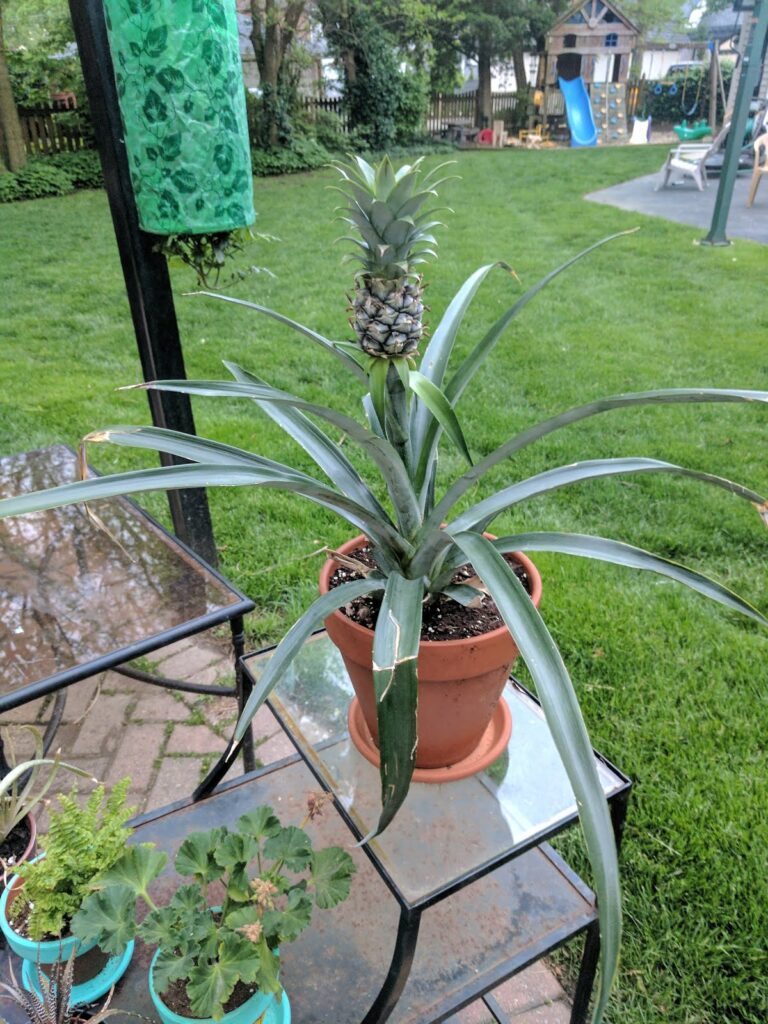
The pineapple is a tropical perennial which grows to 3 to 5 ft tall. You can grow a pineapple plant by saving the crown (the top leafy part) and placing it in water until roots develop then planting it in a 5-gallon pot with rich soil and watering it regularly. The plant can take 18 to 30 months to mature and flower so in our area it will have to be moved to a protected location when it gets cold. The fruit usually matures 4 to 6 months after flowering. A plant usually only produces a single fruit although smaller side shoots may develop once the first fruit is harvested – kind of like broccoli. The “mother” plant may also develop side shoots from the base – known as pups – which can be transplanted to grow a new plant.
Harvest and Storage
For best flavor and sugar, the pineapple should be left to ripen on the plant. The underlying color will change from green to golden and the fruit will begin to smell ripe. The fruit may also begin to lean over as the stem begins to soften. The fruit can usually be twisted off the stalk or can be cut off with a sharp knife. Gloves may be necessary as some varieties are particularly spiky. A whole ripe pineapple will last 3 to 5 days at cool room temperature. You can extend its life by storing the ripe fruit in the refrigerator for up to a week. Cut pineapple should be stored in a non-metal container in the refrigerator for up to 5 days or frozen for longer term storage.
By: Michael Vidrine
Pineapple Sauce
Ingredients
- 1 cup pineapple chunks fresh or canned, drained
- 2 tbsp Messina Hof Off Dry Muscat
- 1 tbsp grated fresh ginger
- 2 cloves garlic minced
- 2 tbsp soy sauce
- 1 tbsp brown sugar or honey
- 1 tbsp rice vinegar or apple cider vinegar
- 1/2 tsp salt
- 1/4 tsp black pepper
Instructions
- In a skillet on medium heat, add minced garlic and ginger; sauté for 30 seconds until fragrant.
- Stir in pineapple chunks, pineapple juice, wine soy sauce, brown sugar, and vinegar. Simmer for 2–3 minutes, or longer if you like a thicker sauce. (You can also add a pinch of corn starch for thickening.)
- Lightly puree with an immersion blender. You still want there to be some texture to the sauce.
Notes
5 Tips for Pairing Wine with Pineapple
- Ripe Pineapple is like a wine in fruit. Even sweet juicy pineapples have a crisp almost citrus after taste. The flavor is reminiscent of a stone fruit-citrus fruit blend. Think wines with tropical fruit notes like Muscat Canelli and the spice of Gewurztraminer.
- The main pairing consideration with pineapple is the preparation and sweetness level of the fruit.
- Fresh pineapple in salads that have addition acid either in the less ripe pineapple, salad dressing or other ingredients works well with Pinot Grigio or Riesling.
- If you use the pineapple in a sauce recipe, the strongest flavors may be the other ingredients of the sauce. Pair it with a wine can complements the strongest flavor. The pineapple adds texture and a luscious sweetness to the sauce. A wine with a hint of sweetness and good acidity works well.
- The addition of meat into the dish will add a savory flavor to the sauce that raises the flavor weight. Heavier flavor weight of dish allow heavier flavor weight of wine like a sweet rose’.
- Recommended wines: