
Did You Know?
Like its cousin wheat, barley (Hordeum vulgare) is a grass-like grain first domesticated in the Fertile Crescent probably around 9000 BC and then spread through Europe and most of Asia by around 2000 BC. Barley is the fourth most produced grain behind maize, rice and wheat. Today, most of the barley grown is used for animal feed with about a third used for fermented beverages like beer or distilled spirits. A relatively small amount of barley is used for direct human consumption in bread, noodles, soups and porridge. Barley was so important in ancient England that the word “barn” (bere-aern in Old English) literally meant “barley store”.
Types of Barley
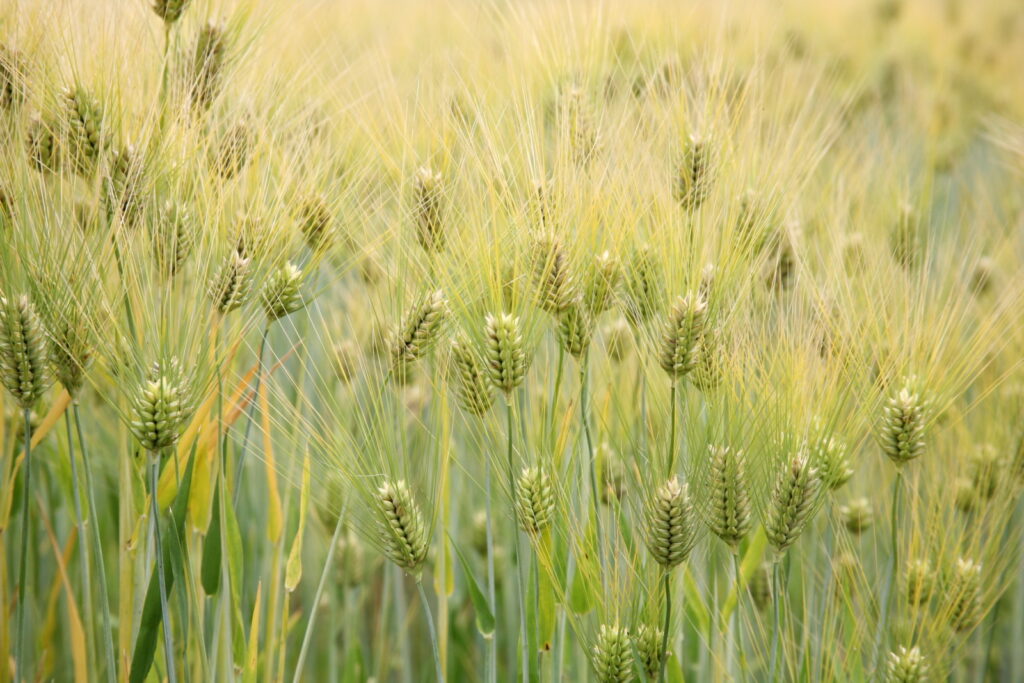
Broadly, there are two types of barley, two-row and six-row. As the name implies, two-row barley only produces two rows of seeds in the head with the outer 4 rows being non fertile. Six-row barley produces seeds on all six rows of the barley head though the seeds tend to be smaller than those on two row barley. There are also spring and winter varieties of both types of barley. Generally, two row barley is favored for fermented beverages and direct consumption while six-row types are more typically used as animal feed – although, particularly in the US, some six-row barley is being used for fermented beverages. We also have a native barley called Little Barley (Hordeum pusillum) which is primarily grown as winter cover, roadside stabilization and erosion control. Texas grows about 30,000 acres of barley annually including the variety TAMbar 501 developed by Texas A&M University. Pearl barley is made from regular barley by removing the outer hull and abrading away the bran leaving a polished “pearl-like” grain.
When to Plant
Barley is a cool season annual grass and in Texas is typically grown as a winter crop, planted in mid-to-late fall and harvested in the spring. Very early spring plantings are also possible to target harvest before summer heat sets in. Barley will usually mature in 90 days or less. In a home garden, use a planting rate of about ¼ pound of seed per 100 square feet. Keep the planting consistently moist until seedlings emerge then provide an inch of water per week until the heads mature. Barley is more salt tolerant than most grains, which is beneficial given our local water salinity.
Harvest and Storage
Harvest barley when the straw is yellow, and the grain is firm and not juicy. Cut the stalks and store them in a well-ventilated space for an additional 2 weeks to completely dry the grain. Thresh the grain from the stalks by flailing with a stick or piece of PVC pipe or beating the stalks inside a container. Winnow by pouring the grain back and forth in a breeze to remove the chaff. Finally, dehull the grain with a grain mill attachment or by hand by rubbing in a mortar and pestle or similar means then winnow again. Store whole barley for 6 months in an airtight container in a cool dark location or for a year by freezing. Barley flour is best stored frozen for up to 6 months. With its firm texture and nutty flavor, barley is a nice substitute in savory pasta and rice dishes or as an alternative to breakfast cereal.
By: Michael Vidrine
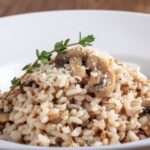
Barley and Mushroom Risotto
Ingredients
Risotto
- 1 cup pearl barley
- 2 tbsp olive oil
- 1 medium yellow onion finely chopped
- 2 cloves garlic minced
- 4 cups vegetable or chicken broth warm and ready
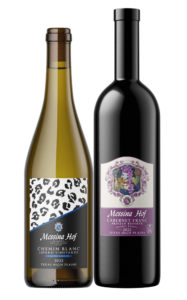
- 1/2 cup Messina Hof Lepard Vineyards Chenin Blanc
- 1/2 cup Parmesan cheese freshly grated
Mushrooms
- 8 oz mixed mushrooms button, cremini, or shiitake
- 2 tbsp butter
- 2 sprigs fresh thyme
Instructions
For the Mushrooms
- Warm a large skillet over medium-high heat, then add butter and let it foam. Once melted, immediately add the cleaned mushrooms, ensuring they sizzle upon contact.
- Cook the mushrooms undisturbed for about 5 minutes, then stir. Continue cooking until they turn deep golden brown and release their moisture, around 2 to 3 more minutes.
- Transfer mushrooms to a warm plate to preserve their heat while you prepare the risotto base.
For the Risotto
- Pour vegetable or chicken broth into a saucepan and heat over low heat, keeping it at a gentle simmer.
- In a large, heavy-bottomed pot, heat olive oil over medium heat. Add onion and garlic, cooking until translucent and aromatic, about 3 to 4 minutes.
- Stir in the pearl barley and cook for 2 to 3 minutes, stirring regularly, until the edges look slightly translucent.
- Pour in the white wine, scraping up any browned bits on the bottom, and stir gently until the wine is almost completely absorbed.
- Pour a ladleful of warm broth into the barley, stirring constantly until liquid is almost gone. Repeat, adding broth one ladle at a time for 25 minutes.
- Fold the sautéed mushrooms and thyme into the creamy barley when it’s just tender, stirring gently until everything is heated through, about 2 minutes.
- Remove from heat, stir in grated Parmesan cheese, season with salt and pepper to taste. Let rest for 2 minutes to thicken slightly before serving.
5 Tips for Wine and Barley
- Always pick your wine first!
Barley has a mild, slightly nutty flavor and a chewy texture. It is often used in various dishes like soups, salads, and casseroles.
Wheat has a lighter, slightly sweet flavor that is often described as similar to fermenting bread, while barley has a nuttier and more pronounced taste. Both grains contribute unique characteristics to beer and other foods, with barley being more robust in flavor.
The heavier the flavor weight of the selected wine, the bolder the weight of the bread, pasta or cereal you should choose. Barley can balance the bolder flavored wines when the wine is used in the dish or ingredients like mushrooms are used.
The Barley and Mushroom Risotto has the sauteed mushrooms that adds flavor weight which makes it a perfect pairing with the Cabernet Franc.
Recommended wines: