Did You Know?
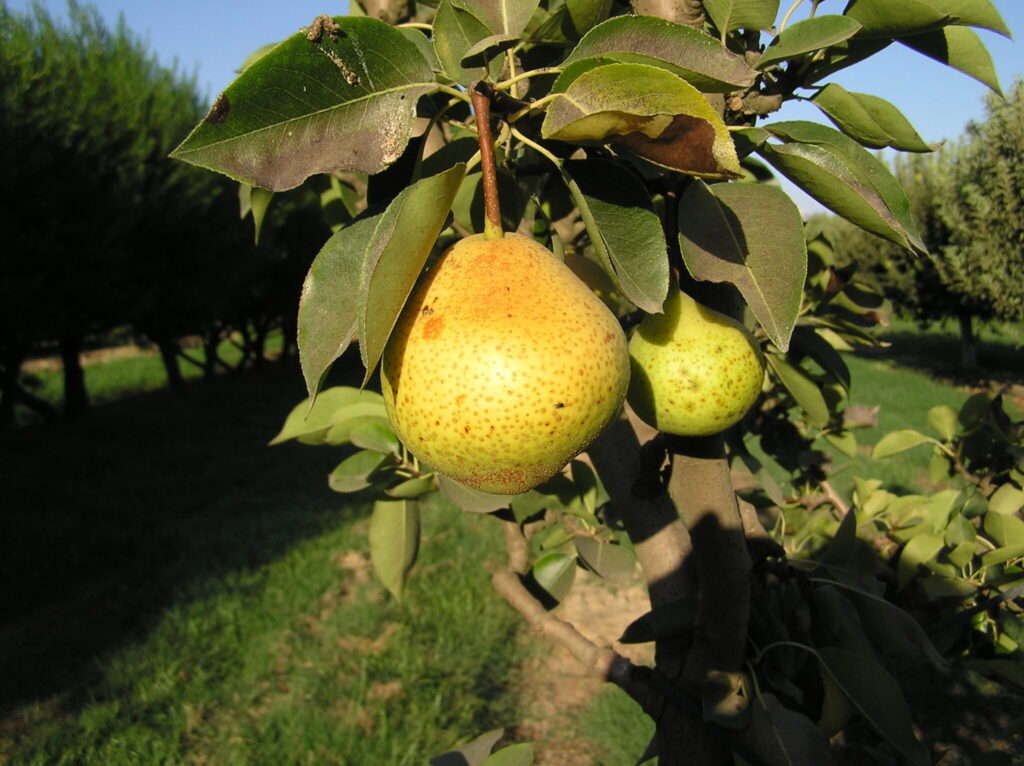
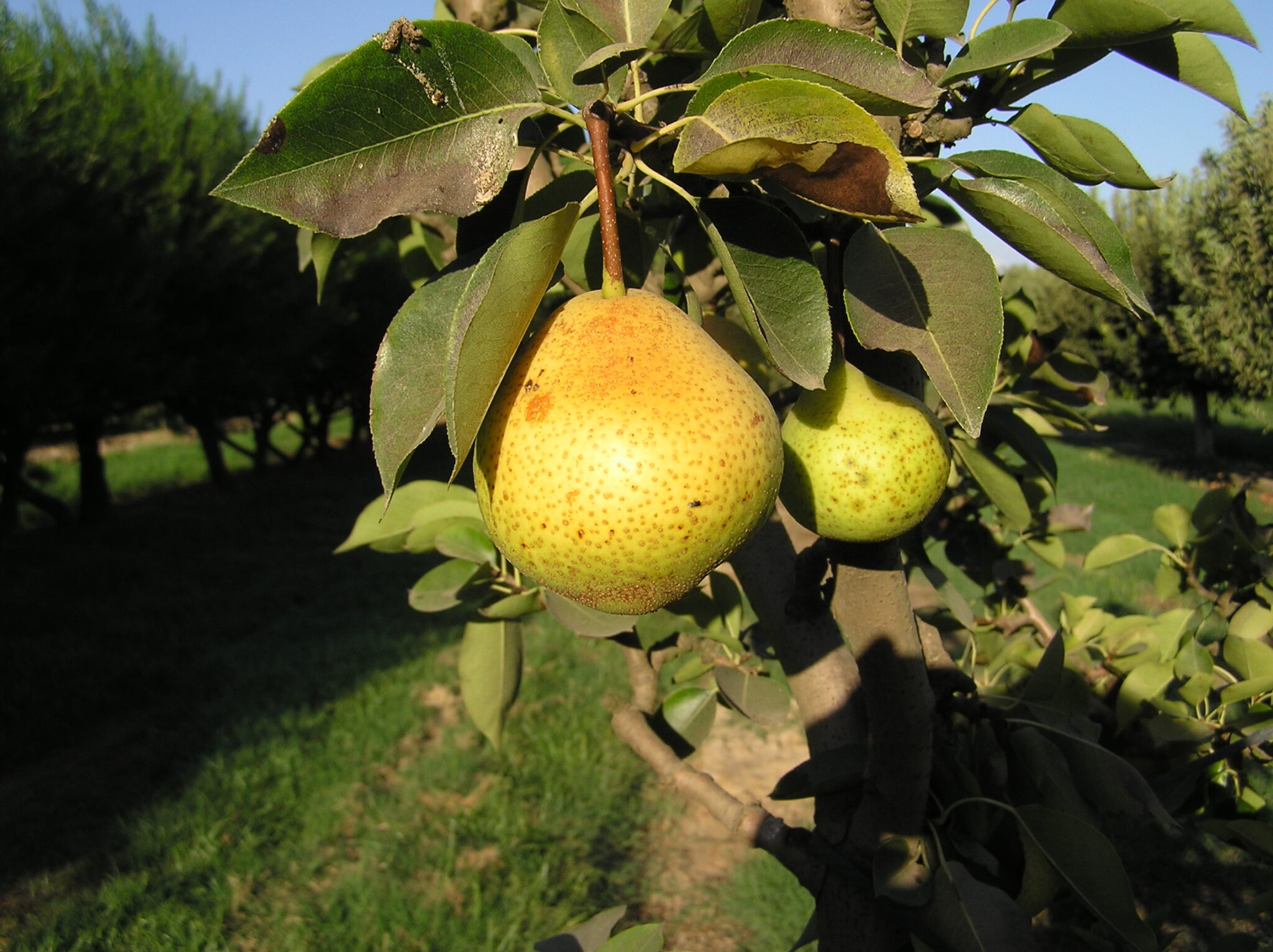
Pears (Helianthus annuus) are native to Europe, North Africa, and Asia. Records indicate pears have been cultivated for over 4000 years – particularly in Asia. Pears are in the rose family (Rosaceae) as are many of the other fruits we like to grow in our area including peaches, plums, blackberries and strawberries. Botanically, the core area of the pear is the actual fruit while the surrounding fleshy area that we eat is considered a pseudo fruit – something produced to attract critters like us to eat and spread the seeds.
Types of Pears
There are over 3000 known varieties of pears of which four species produce most of the edible fruit. Varieties differ in size, shape color, taste and flesh texture. Sadly most of the melting flesh European varieties do not do well locally. In our area, pear varieties are limited to those with relatively low chill requirements and resistance to the bacterial disease fire blight. Varieties that do well are usually Asian/European hybrids. Recommended varieties include Kieffer, Orient, Moonglow, Ayers and Magness. The Asian varieties – often known as an apple pear – Shinko and Shin Li can also be grown locally. Most pears require another variety to pollinate although Kieffer and Orient are somewhat self-fruitful if you only have room for one tree. Orient has consistently been the best producer in our orchard.
When to Plant
Pear trees are almost always grafted and bought either bare root or in a pot. Pears can also be grafted onto dwarfing rootstock to keep the trees quite small. The best time to plant is after the trees are dormant in the fall through winter so the roots can get established before the heat of summer sets in. Pears naturally want to grow in a very upright and tight limb orientation. To maximize production, pears are usually pruned and trained into a more spreading and open form like central leader or modified central leader. Young trees may take 4 years and up to 8 years to begin to produce fruit – fortunately, once the trees are established, they can live for 100 years or more. A saying among fruit orchardists is “You plant pears for your heirs.”
Harvest and Storage
Pears are a climacteric fruit that unlike most fruit should be picked mature but under-ripe and then fully ripened off the tree. Fruit left on the tree will ripen from the inside out and will be over ripe or even spoiled before the outside ripens. The best test to determine when to pick the fruit is to gently lift and slightly twist the fruit. If it comes off the tree easily – it is ready to pick. Depending on variety, indoor ripening can take from a few days to 2 weeks. Refrigerating the fruit will slow the ripening process. When ripe, the stem end of the fruit will become soft first. Ripe fruit can be stored for 2 to 3 more days in the refrigerator. Long term storage options include freezing, canning and drying. Pears can also be made into a wonderful cider-like beverage known as Perry.
By: Michael Vidrine

Poached Pear and Bleu Cheese Salad
Ingredients
- 4 pears firm
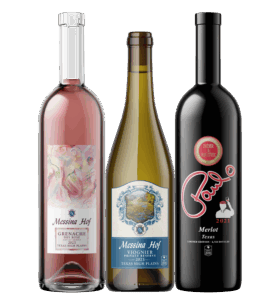
- 2 cups Messina Hof Private Reserve Merlot
- 1/3 cup sugar granulated
- 1 tsp vanilla paste
- 2 cinnamon sticks
- 2 star anise pods
- 2 cups kale washed and chopped
- 2 cups spring mix
- 4 oz balsamic dressing
- 1/2 cup dried cranberries
- 1/2 cup walnuts chopped and toasted
- 1/2 cup smoked bleu cheese
Instructions
- Pour Merlot into a cooking pot, add sugar, vanilla bean paste, cinnamon sticks, and star anise. Cook on medium heat, stirring regularly, until the sugar dissolves, about 2 minutes. Do not boil.
- Peel pears leaving the stems intact. If your pear does not stand upright, cut a bit of the bottom off to level it.
- Place peeled pears into the cooking wine and cook on low heat until soft, about 30 minutes. While cooking, flip them around regularly, so they coat with the wine reduction evenly.
- Once cooked, remove the pears from the pot and set them aside.
- Strain the wine of the spices and return the wine to the pot and continue cooking so the wine reduces to a syrup-like thickness, about 15 minutes.
- Drizzle some of the wine reduction over the pears and place in the refrigerator to cool for at least 4 hours, or overnight.
- In a large mixing bowl, toss together kale, spring mix, and dressing. Distribute evenly onto 4 plates.
- Top the lettuce evenly with cranberries, walnuts, and smoked blue cheese.
- Remove your pears from the syrup and slice into thin slices vertically, fanning the pear as you go. Place on top of your salad and serve.
Notes
- Pears are neutral in flavor with a delicate green melon character. Pears vary in texture. Some are soft and melt-in-your mouth. Others are firm and crisp. They work with most wines since they do not compete with flavor.
- The main pairing consideration with pears is the preparation and what other strong flavors might be included like peppers, vinaigrette, etc. Always pear to the strongest flavor in the dish.
- If you use the same wine in the preparation as that you serve in the glass, the flavors will be absorbed in the pear and make the flavors complementary.
- In the poached Pear recipe, the strongest flavors are the other ingredients of the sauce. The Merlot sauce is rich. It now only creates a beautiful color of the pear, it marries nicely with the Merlot wine. Also, the balsamic dressing adds flavor weight that marries well with the Merlot.
- We always recommend choosing the wine first. Then use that wine as the poaching wine and use a balsamic dressing that complements that wine. If your favorite wine is Viognier, for instance, substitute Viognier in the recipe and choose a white balsamic for the dressing.
- Recommended wines: