Did You Know?
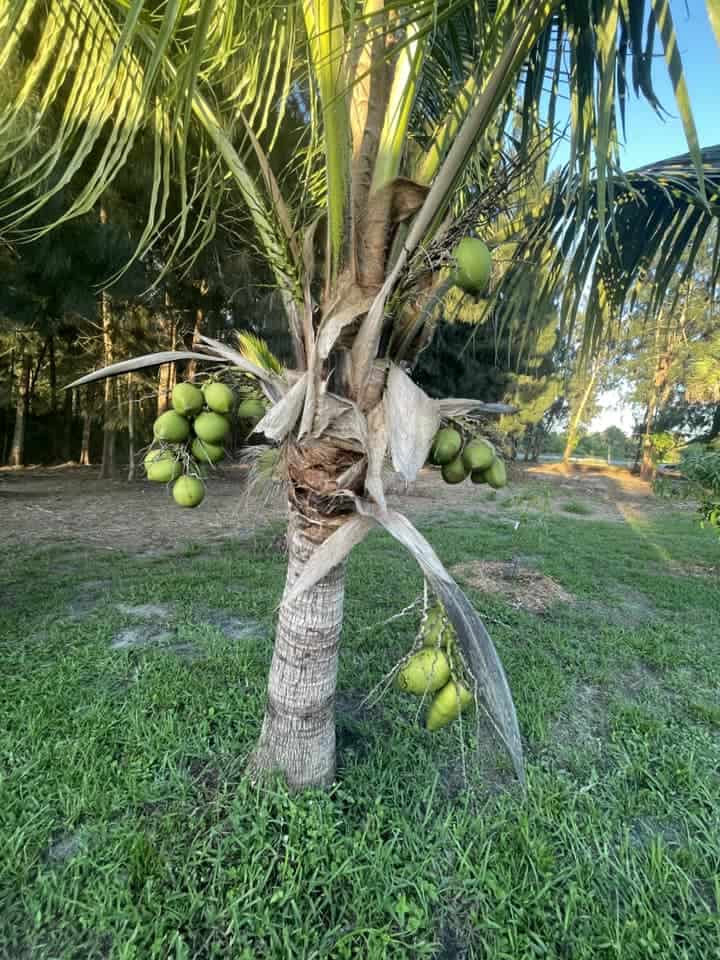
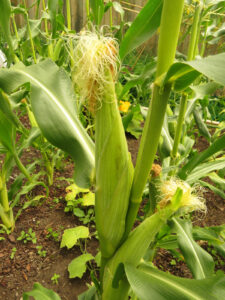
The coconut (Cocos nucifera) is a member of the palm family originating in the central Indo-Pacific. Botanically, the coconut fruit is a drupe, not a true nut. Other drupes we consume as nuts include pecans, walnuts, almonds and cashews. Virtually every part of the coconut palm is used by humans in some manner including coconut meat, coconut milk, coconut water, coconut sap (for palm wine), and coconut oil. The husk and shells can be used for fuel or made into charcoal. Coir fiber from husks is used in ropes, mats, brushes, potting material and sacks. The palm roots are used for dye, and the trunk is used as timber. The coconut plant is a monocot and therefore distantly related to other monocots like grass, sugarcane, corn and lilies.
Types of Coconut
Coconuts can be broadly divided into two fruit types – the ancestral “niu kafa” form with a thick-husked, angular fruit, and the “niu vai” form with a thin-husked, spherical fruit with a higher proportion of “meat”. There are many commercial varieties further sorted mainly into tall, dwarf, and hybrid cultivars. The Malayan Dwarf is the most widely grown variety worldwide. Other varieties like Dwarf Green are brightly colored and produce sweeter coconut water. The variety Macapuno is grown for its jellylike flesh which is especially good for desserts.
When to Plant
Because they are tropical palms, coconut cultivation in Texas is generally restricted to the extreme southern tip of the state. Even there, occasional freezes can damage or kill the plants. In our area, coconut palm cultivation would be in a greenhouse or in a container that can be brought indoors in cold temperatures. The tree thrives on sandy soils and is highly tolerant of salinity which is good considering our water salinity. To fruit, the plant requires abundant sunlight and high humidity along with abundant and regular watering – 60 to 100 inches per year or about twice our normal rainfall. A tree can be started from seed by soaking a mature coconut in water for a couple of days then planting on its side about 2/3 deep in a well-drained media and kept moist and very warm. The seed may take 3 to 6 months to sprout. Alternatively, a sprouted tree can be purchased. Some mature palms can grow to over 100 feet so for home cultivation, a dwarf variety is recommended although even dwarf varieties may ultimately exceed 30 feet in height. Dwarf palms may produce fruit in 3 to 4 years. The trees are self-pollinating so only one tree is required.
Harvest and Storage
Coconuts can be harvested green – 6 to 8 months old for coconut water and jellylike flesh. At 9 to 10 months the yellowish green fruit will have firmer flesh and at 11 to 12 months the fruit will be brown and may fall from the tree naturally. Completely mature coconuts will be dryer and suitable for milk or oil. A pole saw is commonly used to harvest fruit that hasn’t naturally fallen. Some farmers employ macaques to climb taller trees and harvest the fruit – an option if you have your own trained macaque. De- husked coconuts have a storage life of around two to three weeks and mature coconuts with a husk can be stored for three to five months at room temperature. My mother and my wife are particularly fond of coconut – especially in the form of a coconut cream pie.
By: Michael Vidrine
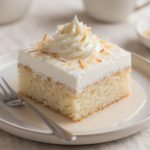
Coconut Tres Leches
Ingredients
- 6 large eggs
- 1 cup granulated sugar
- 1/2 tsp almond extract
- 1 cup all-purpose flour
- 1/4 tsp fien salt
- 1 14 oz can sweetened condensed milk
- 2/3 cup evaporated milk
- 1/2 cup unsweetened canned coconut milk
- 1 cup sweetened flaked coconut
- 1 1/2 cups heavy cream
- 1/4 cup Messina Hof Sparkling Almond
- 1 tbsp powdered sugar
Instructions
- Heat oven to 325°F and arrange rack in the middle. Grease a 9 x 13-inch baking pan with baking spray and set aside.
- Separate eggs placing the yolks in the bowl of a stand mixer and placing whites in a clean medium bowl. Add sugar and almond extract to the yolks and beat with the paddle attachment until thick and sugar has dissolved, about 5 minutes.
- Transfer yolks to a large mixing bowl and thoroughly clean and dry the bowl of the stand mixer. Pour egg whites into the stand mixer bowl and whip with the whisk attachment until they form medium peaks, about 1-2 minutes.
- Add about a third of the whites to the yolk mixture and gently fold in with a rubber spatula to loosen up the yolks. Add the remaining whites and gently fold them in until only a few pockets of whites remain.
- Combine flour and salt in a fine mesh sieve and sift the two over the egg mixture. Fold in flour until just combined, being careful not to overmix.
- Scrape batter into prepared pan and spread evenly. Bake for 20-25 minutes or until a toothpick inserted in the middle comes out clean and the sides of the cake start to pull away from the pan.
- Meanwhile, combine sweetened condensed milk, evaporated milk, and coconut milk in a medium bowl. Whisk until smooth.
- Let cake cool 15 minutes then poke cake all over with a skewer or fork. Pour milk mixture over cake and spread evenly. Let cake cool for another 45 minutes then cover with plastic wrap and refrigerate for at least 4 hours or overnight.
- Once you are ready to serve, place sweetened coconut flakes in a large frying pan and toast over medium heat, stirring frequently, until golden and crisp. Remove immediately to a bowl and let cool.
- Combine heavy cream, Sparkling Almond, and powdered sugar in the bowl of a stand mixer and whip with the whisk attachment until fluffy, firm peaks form.
- Spread cream evenly over cake then sprinkle toasted coconut on top. Cut into squares and serve.
5 Tips for Pairing Wine and Coconut:
Always pick your wine first! It is the centerpiece of the meal, and the food should complement your selection.
Coconuts have a creamy sweet slightly nutty flavor. The sweet creaminess balances the acidity in wine.
Coconuts are a tropical fruit and go well with other tropical foods which makes it a great pairing with semi sweet white wines.
Coconuts used in other cuisines like curry dishes add a creamy texture to the food that helps with balance of the wine but the actual pairing would be to the strongest flavor in the dish.
Taste the wine and then taste the dish to make sure the dish does not overwhelm the wine.
Recommended wines: