Did You Know
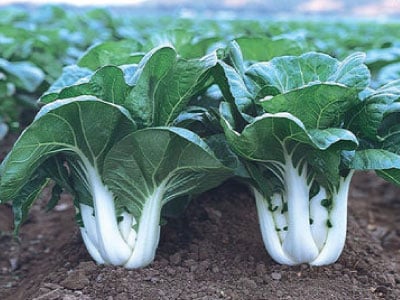
Bok Choy (Brassica rapa susp Chinensis) (AKA pak choi and pok choi) is a cruciferous vegetable and a relative of the large family of garden vegetables in the mustard and cabbage groups. The plant was initially cultivated in China in about the 5th century. In Cantonese, bok choy translates to “white vegetable” which is quite descriptive as most varieties have white petioles (stems).
Types of Bok Choy
Bok Choy comes in a variety of mature sizes from 3 inches to over a foot. The smallest varieties can mature in as little as 30 days while larger types may take up to 60. Most varieties will have green leaves with white petioles but there are varieties with red or purple leaves and some with green petioles. Bok choy also has a lot of close Asian green cousins with differing growth habits and more or less of the mustardy flavor. These include mizuna, mibuna, gai lan, tatsoi and choy sum. I find all these plants attractive enough to be planted in the landscape particularly during the winter months when much of our flower beds are dormant.
When to Plant
Bok choy and its cousins are cool season plants that grow best in our area from fall to early spring. We usually direct seed bok choy once some of the summer heat dissipates in late September to early October. Because the vegetables mature so quickly, succession planting every couple of weeks allows for a long harvest. Bok choy transplants easily so seeds can be started close together then seedlings can be replanted to appropriate spacings. Plantings can continue through the winter (most years) and until about March. Once late spring heat arrives, most bok choi plants will bolt (flower and go to seed) and become bitter and fibrous. Asian Delight and Bopak are a couple of nice varieties to plant that are resistant to bolting and try Toy Choy for a fast mini variety. If your Bok Choy does bolt, know that honeybees will love the flowers.
Harvest and Storage
Bok choy varieties vary widely in maturity, but any variety can be harvested as soon as it is a size that works for your recipe and before it tries to flower. Baby bok choy is super tender and mild while more mature plants will have a bit more flavor and crunchier petioles. We usually harvest the entire plant rather than harvest individual leaves. The cleaned leaves can be stored like other greens in the refrigerator wrapped in paper towels and in a plastic bag for a week to 10 days. Leaves can also be dried, pickled and frozen for longer term use.
By: Michael Vidrine
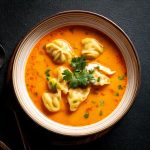
Coconut Curry Soup with Wontons and Bok Choy
Ingredients
- vegetable oil for cooking
- 1 tsp minced garlic
- 1 tsp minced ginger
- 1/2 cup coconut milk
- 1/2 cup chicken stock
- 2 tbsp red curry paste
- 1/4 cup Messina Hof Off Dry Riesling
- 2 tbsp soy sauce
- 1 tbsp sambal chili paste or chili crunch
- 1 bunch chopped cilantro divided
- 1 bunch sliced green onions divided
- 1 cup shredded carrots
- 1 head bok choy cleaned and rough chopped
- mini wontons
- 1 lime cut into wedges
Instructions
- Heat about 2 tablespoons of vegetable oil in a skillet over medium heat on the stove.
- Sautee the garlic and ginger in the oil until fragrant, about 4 minutes.
- Add red curry paste, coconut milk, and chicken stock, whisking until well combined.
- Mix in red chili paste or chili crunch, wine, and soy sauce to the coconut curry broth.
- To the skillet, add bok choy, half of the cilantro, carrots, and half of the green onion, followed by the wontons.
- Allow to simmer, covered, for about 10 minutes until wontons are heated through and bok choy is tender.
- Garnish with additional chopped cilantro, green onion, and a squeeze of lime.
Notes
- Look for baby bok choy over the larger varieties. It will be more tender and have a sweeter flavor profile.
- Curry paste comes in a variety of colors and flavors! Any of them would work great in this soup based on the flavor profile you are looking for.
- Green Curry, or Thai curry, is slightly spicy and coconutty with ginger, cumin, coriander, and lime leaves.
- Red Curry, also a Thai curry, is made with lemongrass, chili peppers, ginger, and shrimp paste (!) in addition to coconut milk..
- Yellow Curry is made with lemongrass, ginger, and turmeric blended with coconut. It has a notable absence of peppers.
5 Things to know about pairing wines with Bok Choy
- Bok Choy, like cabbage, is one of the most versatile vegetables. It can be prepared raw in slaw, braised, or stuffed with many things. Many different wines work well depending on preparation!
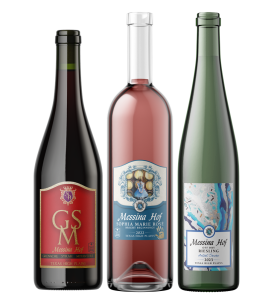
- Bok Choy served raw in slaws work well with light white wines with a hint of sweetness like Off-Dry Riesling or Sophia Marie Rose’.
- Introducing fatty, fried or savory elements like bacon or earthy flavors like mushrooms boost flavor weight and texture which pair well with richer heavier wines like GSM.
- The Vintage House Coconut Curry Soup recipe combines all of the best flavors that complement light Off-Dry wines like the Riesling. (Link to Recipe)
- Try it with these recommended wines: