Did You Know
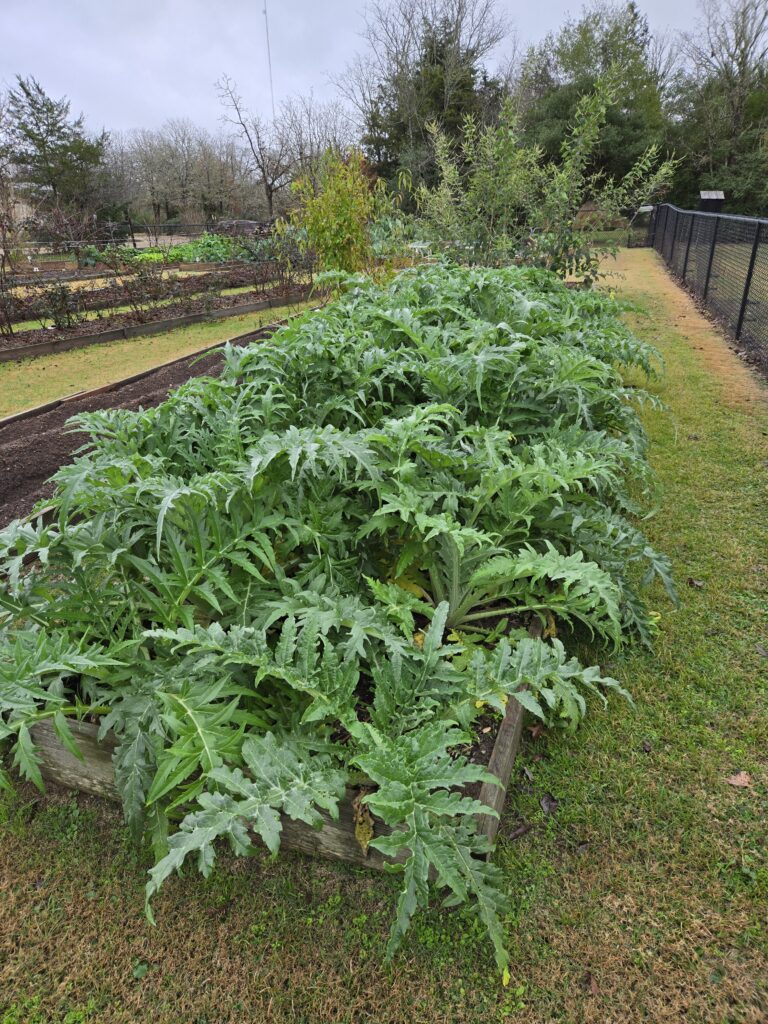
The artichoke (Cynara cardunculus var. scolymus) (often called globe artichoke) is a variety of thistle that has been improved to form a large edible flower bud. The artichoke is closely related to the cardoon from which we get an edible stem (petiole). Artichokes are native to the Mediterranean region where they have been cultivated since 400 BCE particularly around Sicily and Greece. A plant with a similar name – Jerusalem artichoke – is neither from Jerusalem nor is it an artichoke. This is a type of North American sunflower that produces edible tubers.
Types of Artichoke
Most artichokes produce green flower buds but there are also purple varieties. Varieties also differ in size and shape of the flower buds and how quickly they mature. Green Globe, Imperial Star, Emerald and Purple Sicilian are some varieties that are recommended in our area. Green Globe is the predominant variety in our garden – the seeds are readily available and relatively inexpensive.
When to Plant
Artichokes are tender perennial plants that are not fond of being too cold and can struggle during our long hot Summers. Aggie Horticulture recommends starting seeds indoors about mid-August then transplant the seedlings outdoors after cooler weather arrives – about mid-October. I have also successfully direct seeded artichokes in late September through October. Plants can be damaged by temperatures below 25 degrees warranting covering during cold snaps. By fall, mature artichoke plants (mother plants) can produce basil suckers called pups which can be gently removed from the mother plant and transplanted for a new plant next season. Artichokes need well drained fertile soil and requite consistent moisture for the best production. Although artichokes are a perennial plant, many of our plants do not make it through the summer requiring some reseeding every fall to maintain the overall planting.
Harvest and Storage
Harvest artichokes when full sized, and the buds are still tightly closed. Cut the stem 2 to 3 inches below the bud. The first artichoke harvested from each plant (the king choke) will be the largest. The plant will then produce multiple new stems with smaller heads. These smaller heads taste just as good – you just get to eat more of them. We usually expect to get a dozen artichokes per plant. Artichokes can be stored for a week in the refrigerator. For longer term storage artichokes can be cooked and frozen, pickled and canned. Any artichokes left to mature on the plant will produce a large flower-head with a dramatic neon purple inflorescence.
By: Michael Vidrine
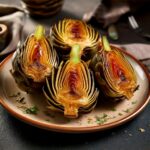
Roasted Artichokes
Ingredients
- 3 fresh artichokes
- 2 large lemons juiced
- 2 tbsp melted butter
- 6 cloves garlic peeled and roughly chopped
- fresh rosemary to taste minced
- fresh thyme to taste minced
- fresh oregano to taste minced
- fresh sage to taste minced
- Kosher salt
- freshly cracked black pepper
- 1/2 cup water
- 1/2 cup Messina Hof Mourvèdre
Instructions
- Heat oven to 400°F.
- Mix together the fresh herbs, garlic, melted butter, and wine in a small mixing bowl and set aside.
- Use a knife to slice off the bottom 1/2-inch of the artichoke stems, and the top 1 inch of the artichoke globes Remove and discard any small leaves toward the bottoms of the stems. Rinse the artichokes thoroughly with water.
- Slice the artichokes in half vertically. Use a spoon to scoop out the fuzzy “choke” in the middle of the artichoke. Then use kitchen shears to trim about 1/4/-inch off the pointy tips of each of the artichoke leaves. To prevent browning, rub the squeezed lemon rinds all over the entire surface of each artichoke half.
- Place the artichoke halves in a baking dish or on a baking sheet cut-side-up. Brush the cut sides of the artichokes evenly with the garlic herb butter and wine mixture. Season with salt and pepper.
- Turn the artichokes over so they are cut side down. Brush the tops of the artichokes with garlic herb butter and wine, and season with salt and pepper.
- Drizzle the remaining butter and wine mixture as well as water into the bottom of the pan with cut artichokes.
- Bake uncovered for 15 minutes. Then remove and cover the pan with aluminum foil, and bake for an additional 25-35 minutes, or until the artichokes are tender and the leaves pull off easily.
- Place the tray on a cooling rack. Serve the roasted artichokes warm with melted butter for dipping.
5 Tips for Wine Pairings with Artichoke
- Artichokes are the flower bud of a thistle plant. They have a tough outer layer of leaves that protect a delicate interior called the heart. The heart and the tender leaves surrounding it are the only edible part of the plant. Once cooked, the edible parts are a great wine pairing appetizer or a delicate side for an entrée.
- Raw artichokes have a mildly bitter taste. Steamed artichokes express a lemony flavor. These preparations complement light wines with good acidity like Riesling and Sparkling Rose’. Try garlic, onion, lemon, bay leaf.
- Fried artichokes have a more earthy savory flavor and can complement reds. Try thyme, rosemary, and oregano.
- Overly sweet wines will overcome the artichoke and mute the flavors but mildly sweet wines pair easily.
- Recommended wines:
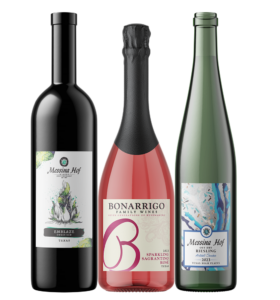
- Messina Hof Off Dry Riesling (dry with a hint of sweetness)
- Messina Hof Sparkling Sagrantino Rose’ (dry brut)
- Messina Hof Emblaze (semi-sweet red)