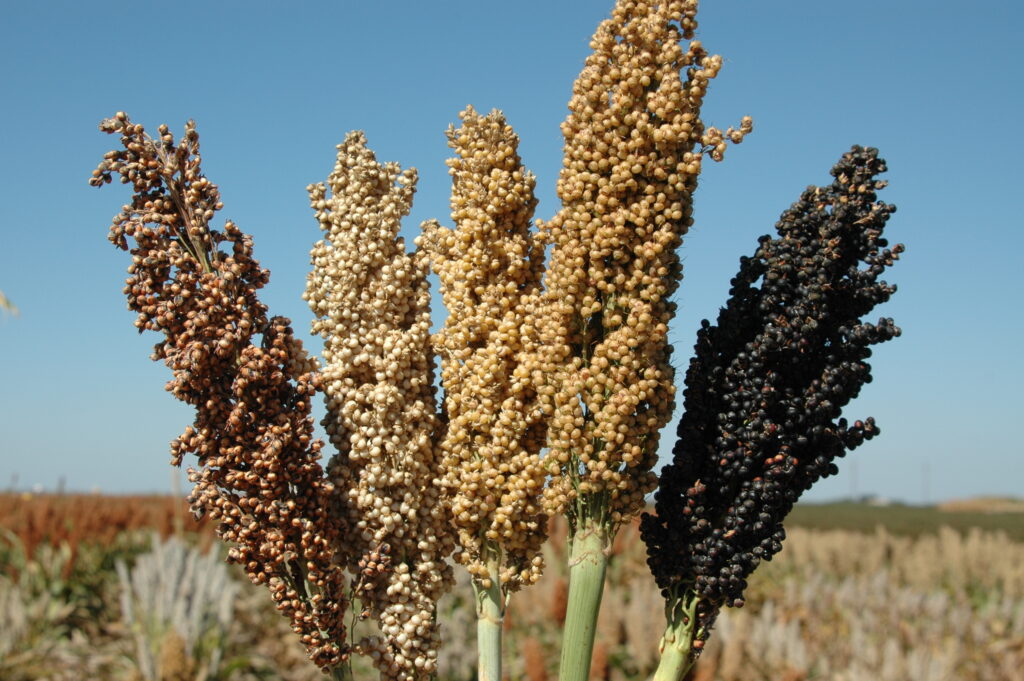


Did You Know?
Wild sorghum (Sorghum bicolor) is native to Africa and was domesticated more than 5000 years ago. Sorghum is the fifth most important cereal crop after rice, wheat, maize and barley. The US is the largest producer worldwide and Texas is second in the US in sorghum production with over 3 million acres planted annually. One seedhead or “panicle” of sorghum can produce over 3000 seeds. Sorghum is closely related to millet and maize and more distantly related to other food producing grass including sugarcane. Sorghum is widely used for animal fodder, biofuel, ethanol production, birdseed, soil stabilization and as a cover crop. As a food source sorghum is used as a whole grain, as flour, as syrup and in fermented beverages. Sorghum is a very important food cereal in many areas including Africa, India, China, Central America and Mexico.
Types of Sorghum
There are many different types of sorghum separated primarily by their intended use. These include grain sorghum – the most planted with multiple uses; forage sorghum for grazing, hay and silage; biomass sorghum growing to 20 feet for biofuels; sweet sorghum grown for syrup production, white sorghum grown for whole grain and flour and other specialty sorghums including popcorn sorghum and others grown as ornamentals. Texas A&M is a global leader in sorghum research and has developed many improved varieties including antioxidant-rich grain sorghums for human consumption. For home grain production try Kansas Grand and Waxy Burgundy varieties or for maximum antioxidants the Texas A&M varieties Onyx and Sumac. Syrup varieties include Dale, Rox Orange and Sugar Drip.
When to Plant
Sorghum is a drought and heat-tolerant plant which grows well even on low fertility soils. As a robust grass it can out-compete most weeds. The plant is also more salt tolerant than most other grains. Plant sorghum in full sun once soil temperatures are 65 degrees or above. Direct sow the seeds about ½ inch deep and 8 inches apart in a bed. Water well until established then periodically if rainfall is scarce. Sorghum is a grass and may resemble a weed initially. In good soil, grain and sweet sorghum varieties can easily grow to over 6 feet. Birds will want a share of the seeds.
Harvest and Storage
Harvest sweet sorghum for syrup when the seeds are still soft and the plant stems most juicy. Remove the seedheads and all leaves then cut the stems to the ground. The syrup is made from the juice in the stems just like sugarcane. Crush or boil the stems to get the sweet juice then boil to a syrup consistency (this will take many hours). For grain, harvest the panicles with a bit of attached stem when the seeds are hard and have changed to their mature color. Dry the seeds another 3 to 5 days indoors. Thresh and winnow to get clean seeds and if desired process to flour in a grain mill or food processor. Flour may be kept in an airtight container and refrigerated for a few days or frozen for a few months. Whole grain sorghum may be kept in a pantry for up to 6 months or frozen for a year. Syrup will store unrefrigerated for up to 6 months and up to a year in the refrigerator. Processed and sealed syrup will keep for years. Sorghum is gluten free and is used in many baked goods recipes. As a whole grain, sorghum is a great alternative to rice and oats. Sorghum syrup has a long history in the south and is traditional on pancakes and biscuits and makes an interesting glaze on BBQ meats.
By: Michael Vidrine

Greek Sorghum Bowls
Ingredients
Bowls
- 1 1/2 cups cooked sorghum
- 1/2 sweet onion diced
- 2 tsp olive oil
- 1/4 cup pine nuts
- salt to taste
- 1/2 cup cherry or grape tomatoes halved
- 1/2 cup cucumbers cut into half moons
- 1/4 cup feta cheese crumbled
- 10 calamata olives pitted and cut in half
- ¼ – ½ cup Gewürztraminer herb vinaigrette
- 1 lemon zested
Gewürztraminer Herb Vinaigrette
- 10 leaves basil fresh
- 1 tbsp chives finely diced
- 1/2 oz garlic minced
- 12 1/2 oz Messina Hof Off Dry Gewürztraminer
- 1 1/2 oz white wine vinegar
- 1 1/12 oz Dijon mustard
- 2 oz honey
- 10 oz olive oil
- salt and pepper to taste
Instructions
Bowls
- In a skillet over medium high heat, warm the olive oil until it is wavy. Add the onion and sauté for 2-3 minutes until translucent. Add the pine nuts and sorghum and sauté until warm. Season with salt to taste.
- Split the sorghum pilaf into two bowls and top with the toppings, drizzle with herb vinaigrette. Finish with fresh lemon zest.
Gewürztraminer Herb Vinaigrette
- Add all ingredients except oil to a blender and pulse until well blended. Be sure to scrape down the sides of the pitcher as needed.
- Starting on low speed, slowly stream in the oil until the mixture emulsifies and thickens. Increase the speed to medium as you stream in the oil and the dressing starts to thicken.
- Taste and adjust the seasoning, adding more salt or pepper if you like.
5 Tips for Wine and Sorghum
- Always pick your wine first!
- Sorghum is a gluten free grain used in cereals, grain bowls, salads, soups, stew, and in syrup making.
- Sorghum’s chewy texture and nutty flavor make it a great addition to many recipes and a nice bridge for more tannic red and crisp white wine pairings.
- The heavier the flavor weight of the selected wine, the bolder the weight of the ingredients you add to the recipe you should choose. Heavier flavor weights balance the bolder flavored wines while lighter flavor weight ingredients go better with white wines.
- The Greek Sorghum Bowl recipe utilizes a Gewurztraminer dressing adding a lighter crisper texture and taste that goes well with white, rose’, and light red wines.
Recommended wines:
- Messina Hof Bonarrigo Sparkling Sagrantino
- Messina Hof Bonarrigo White
- Messina Hof Off-Dry Muscat Canelli