
Did You Know?
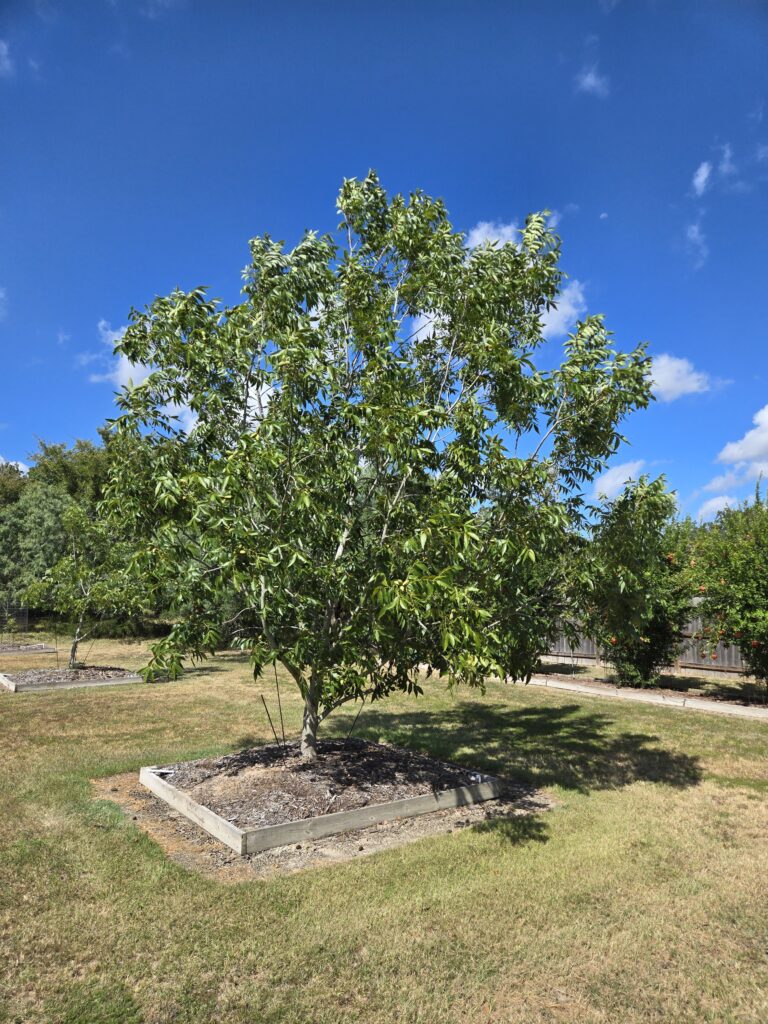
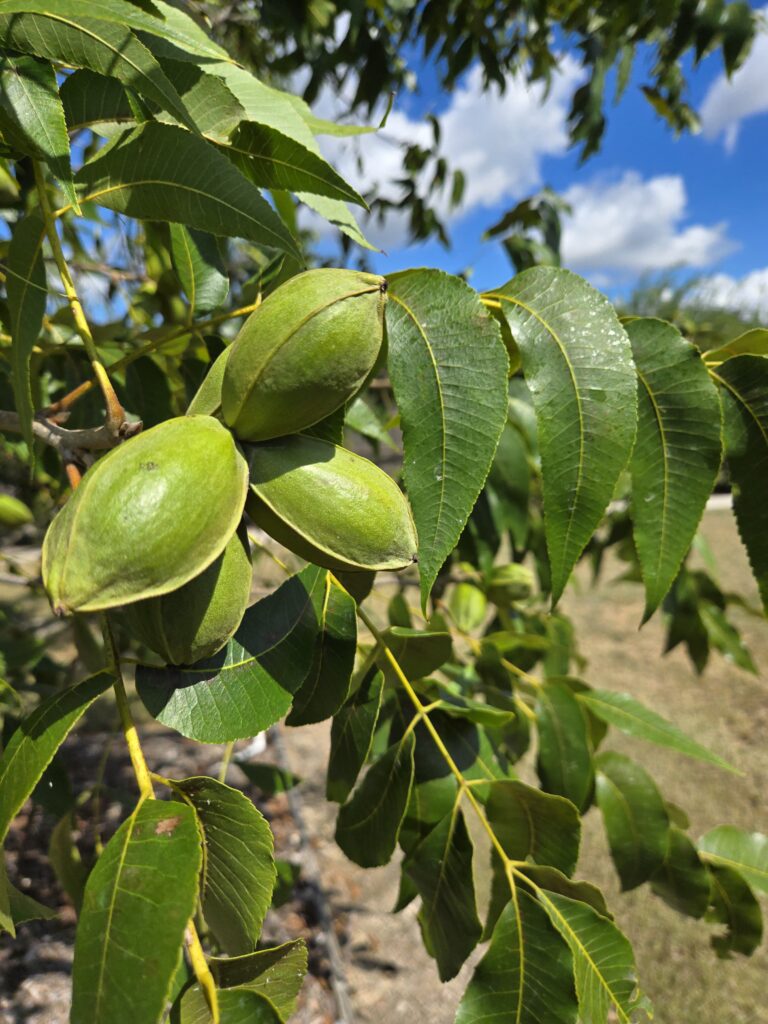
The pecan (Carya illinoinensis) is native to our area and is the state tree and the state nut of Texas. The pecan is botanically not considered a nut but rather is the seed of a fruit (a drupe). Other seeds that we treat as nuts include almond, pistachio and cashew plus the peanut which is actually a bean. Pecans are in the same genus as hickory and hybrids of the two have yielded edible fruits known as the hican.
Types of Pecans
There are over 500 named varieties of improved pecans and many more “native” varieties. Improved varieties usually have larger fruit and better disease and pest resistance. Pecan trees are either Type I or Type II based on how they flower. Type I trees (protandrous) produce male flowers before their female flowers. Type II trees (protogynous) mature their female flowers before their male flowers. Pecan trees therefore self-pollinate poorly and require a tree of the opposite type nearby to set a good crop. Pecans are wind pollinated, and pollen can travel for miles, but best pollination will occur within 150 feet. Pecan scab, a fungal disease, is a serious problem in our area and varieties with good scab resistance are recommended. Varieties suggested for our area include the type II varieties Kanza, Lakota, and Elliott as well as the Type I varieties Mandan and Caddo. Notice that all but the Elliott variety have native American names. We grow all but the Elliott variety in our orchards and all do well.
When to Plant
You can emulate the squirrels and bury pecans in the fall and some of them will sprout and grow into trees. Grown from seed, the tree may or may not produce good quality fruit. Named varieties of pecans are therefore all grafted with an improved variety. Grafted trees also come into production earlier than seed grown trees. Grafted pecan trees generally produce significant fruit at 4 to 8 years of age. Non grafted trees may take 10 years or more to produce well. Pecan trees – whether bare root or in a pot – are best planted when dormant – in the fall through early winter to allow the tree to adapt to its new home and begin to grow roots before summer stresses set in. Mature pecan trees can be 50+ feet tall and wide and to produce well need plentiful sunlight. Consider the trees mature size and sun requirement when selecting a site.
Harvest and Storage
Pecan harvest begins when the fleshy part of the fruit – the shuck – splits and exposes the seed inside. At this point you will likely notice an abundance of squirrels, crows, jays and other wildlife and the race is on to get your share. The seed will eventually drop on its own or this can be accelerated by shaking the tree or whacking the fruit with a long pole. Freshly harvested pecans may be very moist and should be dried for a couple of weeks by blowing warm air over them to improve storage and flavor. After drying, pecans can be stored in the shell for several months in a cool dry place. For long term storage, pecans can be frozen either whole or shelled. Fresh pecans are wonderful but toasting the seeds brings out an even nuttier flavor. My wife is a wonderful desert maker, and I often request pecan pie for any celebration or just because.
By: Michael Vidrine

Pecan Date Balls
Ingredients
- 1/4 cup unsalted butter
- 3/4 cup sugar
- 1/4 cup Messina Hof Angel Late Harvest Riesling
- 2 eggs
- 1 cup Medjool dates chopped
- 1 cup pecans
- 2 cups crisp rice cereal
- 1 tsp vanilla bean paste
- 1 bag sweetened shredded coconut
Instructions
- Add butter, sugar, Angel Riesling, eggs and dates to a large, heavy bottomed pan and mix well.
- Cook over medium heat, stirring frequently, until the mixture becomes thickened. This should take about 20 minutes.
- Stir in pecans, vanilla, and toasted rice cereal.
- Scoop by tablespoon and roll into small balls.
- Roll in coconut and place on a parchment lined tray to cool completely.
Notes
- Pecans are not only Texas state nut but it is a heavy producing tree that anyone can grow in the back yard. You can harvest your own! And there is nothing better than fresh pecans. Pecans are easy to store for winter use. Freezing them will slow the oxidation process which is the browning of the nut. You can thaw and use them as fresh as snacks or in recipes.
- Serve pecans with dried fruits and cheese between the entrée and dessert or dipped in chocolate or frozen whipped cream or candied for dessert with Papa Paulo Port.
- Pecans add an earthy sweetness, natural fat, some tannin and crunchy texture to any dish – sweet or savory.
- Wine pairings with raw pecans range from sweet whites to dry reds to ports. The fresher the pecans, the lighter and sweeter they are, which complements the white wines like Gewurztraminer, Orange Muscat, or Chardonnay.
- As the pecans age or when they are toasted, the flavors are heavier and lend themselves to reds. The tannins in the pecan marry nicely with reds like Tempranillo, Sagrantino, or Syrah
- Recommended wines: