Did You Know
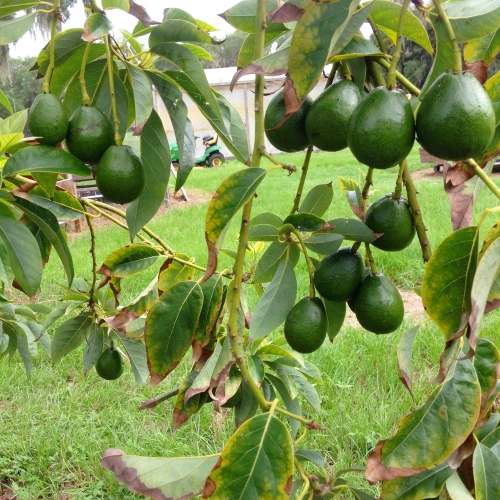
The avocado (Persea americana) is an evergreen tree native to the Central America region and Mexico is the largest producer. The tree can get as large as 60 feet tall and the fruit it produces is a large single seeded berry. The fruit has been in cultivation for 5000 years. The Nahuatl word for avocado is āhuacatl, which translates to a wrinkly part of the male anatomy – use your imagination. Avocado is also known as alligator pear in some regions because of the texture of the skin.
Types of Avocado
There are three species of avocados: Mexican, Guatemalan and West Indian with over 500 named varieties of these species or hybrid crosses. The Mexican species are the most cold hardy and the ones most often grown in Texas. Avocados are also defined by how they pollinate. Some have receptive female flowers in the morning and pollen the following afternoon. Others have receptive female flowers in the afternoon and pollen a day later in the morning. Commercial growers usually plant some of both species for the best fruit set. Some cold hardy varieties include Del Rio, Bacon, and Wilma.
When to Plant
As a subtropical species, avocados can only take moderate cold before they experience fruit loss and tree damage thus most are grown where freezing temperatures are unlikely. Since 2023 Brazos county been classified as zone 9a (used to be 8b), still, even cold hardy varieties will require freeze protection at times and may be best grown in a greenhouse or a large container that can be moved indoors. The trees also prefer protection from high winds – particularly when flowering. Like citrus, it is best to purchase avocado trees after winter so they can acclimate to their new environment before winter freezes roll around again. Remember that avocados want to be trees so choose how to grow them accordingly.
Harvest and Storage
Avocados can ripen off the tree (they are climacteric) and commercially are usually picked firm and green for shipping. In a home garden the fruit can be left on the tree for several weeks after reaching full size but should be picked before the fruit falls off and is damaged. Once picked, avocados will continue to ripen for a week or two at room temperature. Ripening can be sped up by storing the avocados with apples or bananas which emit ethylene gas. To slow ripening, avocados can be stored in the refrigerator for a few days. Avocado puree with added lemon or lime juice can be frozen for several months.
By: Michael Vidrine

Avocado Lemon Cake
Ingredients
- 1 cup sugar
- 4 eggs
- 1 cup ripe avocado about 1½ avocados
- 2 cups all-purpose flour
- 1½ tsp baking powder
- 1 tsp vanilla extract
- 1 tsp almond extract
- 1 tsp lemon zest
- 1 tbsp Messina Hof Sparkling Almond
- 1 cup powdered sugar
- 1/2 cup toasted almonds crushed
Instructions
- Preheat oven to 350ºF and line a loaf pan with parchment paper.
- Beat eggs and sugar together with an electric beater until light, fluffy and doubled in volume for about 5 minutes. Add extracts and lemon zest and mix until just combined.
- Take another bowl and mash avocado well so that it is smooth and silky.
- Sift the flour and baking powder and add together with the mashed avocado in the sugar and egg mixture. Fold gently, scraping down the sides of the bowl to mix thoroughly.
- Pour into the loaf tin, even out the surface and bake in the oven for 40-45 minutes. Insert a skewer/knife into the center and if it comes out clean, then the cake is done.
- Allow to cool completely before taking out of the loaf tin.
- Mix together the powdered sugar, wine and lemon zest until you have a firm but smooth icing.
- Use a knife to smear onto the top of the cake and sprinkle over crushed almonds.
Notes
5 Tips for Wine Pairings with Avocado
- Always pick your wine first! It is the centerpiece of the meal, and the food should complement your selection.
- Avocadoes are a fruit that is a fat. Its delicate flavor helps it complement any wine. It is the preparation of the avocado complements the wine. Taste the wine and then taste the dish to make sure the dish does not overwhelm the wine.
- The fat in the avocado adds a creamy texture to any dish and can soften tannins and acid in wines. Many recipes mix an acid like lemon or lime with the avocado like guacamole. These recipes better pair with crisp white still and sparkling wines.
- Used as a creamy fat mixed with cheese, creamed eggs or beans, they can easily complement red wines.
- The Avocado bread is the perfect complement with red, white, sweet, dry, and sparkling! Try all of these wines with the featured recipe.
- Recommended wines:
- Messina Hof Aggie Network Tempranillo (Rich dry red wine)
- Messina Hof Aggie Network Good Bull (Dry crisp white wine)
- Messina Hof Sparkling Almond (Semi-sweet sparkling white wine)