Did You Know…
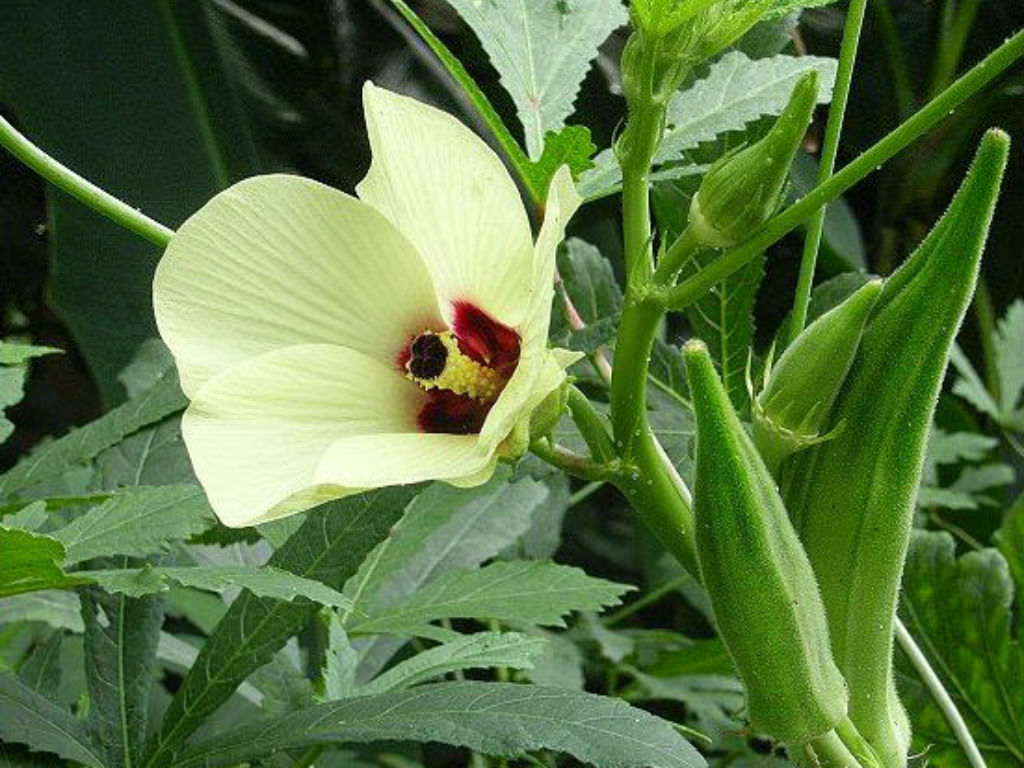
Okra (Abelmoschus esculentus) originated in East Africa and was brought to the Americas as part of the slave trade. The plant is in the Malvaceae family which also includes cotton and cacao plus ornamental mallows like hollyhock and hibiscus. Like its relatives, okra also produces showy large flowers. In different areas okra is also known as gumbo and lady fingers.
Types of Okra
There are numerous varieties of okra that differ in mature plant size as well as fruit (pod) color, shape and size. Some varieties have mature plant heights of over 6 feet while others remain just 3 to 4 feet tall. Pod shapes can be ridged or smooth and some varieties stay tender up to 6 inches long while most are best harvested at 3 to 4 inches. Okra pod colors include red, burgundy, dark green to pale green. Specific varieties recommended for our area include Cajun Delight, Clemson Spineless, Emerald, Burgandy and Silver Queen. The variety Clemson Spineless was introduced in 1939 by Clemson University and was an All-America Selections winner the same year. This is one of the varieties I plant every year – it is a good performer in our garden and seeds are widely available.
When to Plant
The okra plant is a perennial in the tropics but is grown as an annual in our temperate region. Indeed, okra is one of the most heat tolerant vegetables we grow. Okra is usually direct seeded in the garden after all danger of frost and soil temperatures near 70 – generally sometime in April in our area. To improve germination, seeds can be soaked for a day indoors before planting. Because of its heat tolerance, even later warm season plantings do fine. Okra will produce all through the warm months until cool fall temperatures slow down production and the first frost/freeze ends the okra season. I have a very frugal brother in law who has saved seeds of his favorite variety of okra for years by letting a few pods mature late in the season and harvesting the seeds for planting the following year.
Harvest and Storage
The okra pods need to be harvested while still tender. Pods left on the plant too long become quite tough and fibrous. Most okra varieties need to be harvested at 3 to 4 inches long. The stems of the pods can be tough so a sharp knife or pruners should be used to cut the pods from the plant. Overly tough pods should also be removed to keep the plant in production. The plants flower and fruit rapidly in the season, and so harvest may need to be done every couple of days. Pods can be stored for a few days in the vegetable crisper of the refrigerator. Okra can also be canned, pickled and frozen for longer storage. Besides the pods, young okra leaves are edible either raw or more often cooked like other greens. Okra flowers are also edible – excluding the tough base – and can be used in salads or as a garnish. The flowers can also be battered and deep fried. In tough times, okra seeds were roasted and used as a coffee substitute. An edible vegetable oil can be extracted from okra seeds and useful fiber is obtained from the tough okra stalks. Easy to grow in the hottest part of the season and very productive, this vegetable should have a place in every home garden.
Michael Vidrine
Brazos Valley Gardener, Orchardist, Apiarist and Instructor

Okra Patties
Ingredients
- 1 pound fresh okra, sliced into coins (1/4 inch thick)
- 1 cup small yellow onion, diced
- 1 tsp salt
- 1/2 tsp table grind black pepper
- 1/2 cup Messina Hof Serenity white wine
- 1 whole egg
- 1/2 cup all purpose flour
- 1 tsp baking powder
- 1/2 cup corn meal
- 3 cups vegetable oil for frying
Instructions
- Mix all ingredients except flour, baking powder, corn meal, and oil.
- Sift flour, baking powder, and corn meal together and fold into okra mixture.
- In a heavy bottom skillet heat your oil to 350 degrees.
- Carefully drop gently rounded tablespoons of batter into the oil, cooking on both sides 2 minutes per side.
- Remove from the oil and drain on paper towels, season with a pinch of kosher salt while still hot
- Serve with your favorite dipping sauce
Notes
Remoulade
Ingredients
- 2 Cups Mayonnaise
- ½ Cups Messina Hof Riesling German Mustard
- 2 tbsp smoked paprika
- 2 tsp Worcestershire sauce
- 1 tsp lemon juice or dry white Messina Hof wine
- 1 tsp tabasco sauce
- 2 garlic clove minced
- 2 tbsp minced red onion
- ¼ cup ketchup
- 2 tbsp fresh chopped parsley
- 2 tbsp horseradish
- ¼ cup pickle juice or white vinegar
Instructions
- Mix all the ingredients in a food processor until well blended.
Wine Pairings for Dishes with Okra
as recommended by Karen Bonarrigo & Merrill Bonarrigo
- Okra is a great snack raw – it is healthy and just happens to be veggie! It has fiber, aids weight loss, and is a good brain food.
- It has a natural herbal sweetness in flavor with a nice crunch. If the okra is too fibrous to eat raw, the seeds can be toasted and used like nibs in salads.
- Raw they tend to pair best with white wines dry or sweet. Delicate flavors are best suited to okra.
- Easy to use in soups or gumbos or coat with different flavorings like garlic, lemon, cheese, etc. to pair with different wines.
- This month’s Okra Patty recipe is a perfect pairing for a dry crisp white wine, sparkling, or Rose’. Your sauce of choice will be the strongest flavor and the wine should be paired to the sauce.
Recommended wines:

Merrill and Karen Bonarrigo, Wine and Food Pairing experts at Messina Hof Wine Cellars, Inc.