Did You Know?
Swiss chard is native to the Mediterranean region (not Switzerland) and has been in cultivation since before the Roman empire. It is a biennial plant (flowering and setting seed in the second year) and is closely related to beets and spinach. Chard and its relatives are in the larger goosefoot family of plants so named because the leaves somewhat resemble a goose foot – some imagination required. The goosefoot family includes other edibles like amaranth and quinoa. The word “chard” originates from the Latin “carduus” meaning thistle or cardoon – although the chard is neither. The plant was first classified by the Swiss botanist W. D. J. Koch which may have led to the adjective “Swiss” being attached to the name.
Types of Swiss Chard
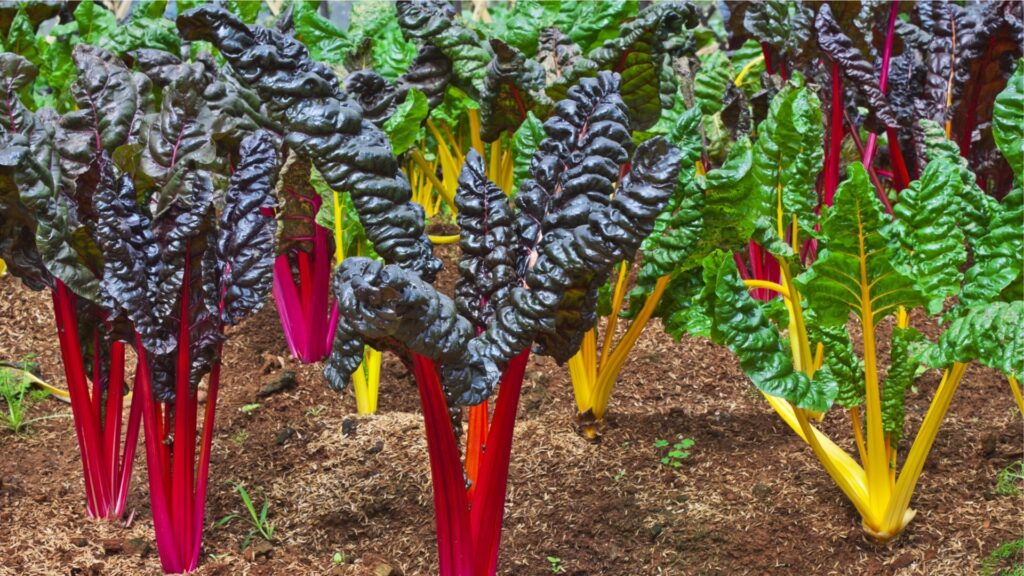
Different varieties of Swiss chard come in an array of colors with leaf blades ranging from green to bronze to dark red. The leaf stems (petioles) can be white, green, yellow, orange or red. Varieties can be so colorful that they are often used in the landscape as a decorative planting. Fordhook Giant has large green leaves with white petioles and is probably the most productive variety in our garden. Rhubarb Red has dark green leaves with dark red petioles. Bright Lights is a mixture of mostly green leaves with an array of petiole colors.
When to Plant
Swiss chard is a cool season plant that grows in our area through the fall, winter, and spring seasons. Chard is usually direct seeded in mid to late September for harvesting through the fall and much of the winter season. If the winter is relatively mild, the fall plantings will often continue to flourish right into spring. A second planting can be sown in mid to late February for harvesting until late Spring. The chard seed is actually a small fruit with multiple seeds inside so thinning of the plants may be required. Excessive plantings can be thinned by snipping with scissors or seedlings can be dug up, separated, and transplanted. Chard is a hardy plant and transplants readily.
Harvest and Storage
Swill chard is a cut and come again plant where individual leaves are harvested, and the plant will continue to produce new foliage. Leaves can be harvested at any size with the younger leaves being more tender and generally milder in flavor. Tiny thinnings and very small leaves are great eaten raw in a salad. More mature leaves are generally cooked like other greens. Chard stems can take longer to cook and are often separated from the leaf blades for longer cooking or even a separate dish. In the South of France, chard stems were often specially prepared for a Christmas Eve treat.
Chard can be stored in the refrigerator for up to 3 days or can be blanched and frozen for even longer term stoerage.
By: Michael Vidrine
Swiss Chard & Cheese Stuffed Mushrooms
Ingredients
Mushroom Caps
- 1 lb mushroom caps cleaned
- 1/2 tbsp Kosher salt
- 2 tsp herb mix thyme, parsley, chives
- 1 tsp ground black pepper
- 2 tbsp garlic oil
Cheese Mix
- 1/4 cup ricotta
- 1/2 cup mascarpone
- 1/2 cup gruyere or Swiss cheese shredded
- 2 tbsp herb mix thyme, parsley, chives
- 1/2 tbsp garlic
- 1/2 cup Panko
- 1/2 cup Swiss chard julienned and sautéed
- Kosher salt to taste
Instructions
Mushroom Caps
- Clean the mushrooms and remove the stems.
- Mix the remaining ingredients with the oil and toss the mushrooms in the mix.
- Lay the caps out on a tray with roasting rack. You want the Mushrooms to be stem side down.
- Bake the mushroom caps at 350 degrees for 15 minutes.
- Store in the fridge before stuffing.
Cheese Mix
- In a sauté pan, add a bit of oil and sauté the Swiss chard until tender and all the liquid is cooked off.
- Allow the Swiss chard to cool and press out extra water with your hands.
- In a medium bowl, combine remaining ingredients and mix thoroughly using a folding motion.
- Stir in the Swiss chard until mixed evenly through the cheese mix.
- Use a .5 oz (about 14.79 ml) scoop to portion out balls of filling. Roll the portions into balls and store on a lined baking sheet in the cooler so that they may set up.
Stuffed Mushroom Assembly
- Place one ball in each mushroom once ready to assemble. Bake at 350 degrees until cheese is melted and started to brown. About 10-ish minutes.
- Serve with Bianco Sauce.
- The Panko is optional. If you are watching carbs, you can eliminate them altogether!
Wine Pairings for Dishes with Swiss Chard
as recommended by Karen Bonarrigo & Merrill Bonarrigo
5 Things to know about pairing wines with Swiss Chard:
- Dark, leafy greens are easily interchanged in recipes.
- Swiss Chard is more flavorful green. Its flavor weight pairs nicely with red wines. My favorite is rainbow as I love the colors of stems and veins.
- Cooking Swiss Chard softens any bitterness and brings out more earthy flavors.
- Adding additional heavier earthy elements, such as mushrooms and bacon, create depth and richness and allow for pairings with heavier and more full-bodied wines.
- Different seasonings and spices can also be used in the dish with different flavor directions. Add garlic and onion for more savory flavors.
- Eaten raw whites are better. Cooked I prefer reds.
- Recommended wines:
- Private Reserve Trebbiano
- Private Reserve Cabernet Franc (heavier-bodied dry red with earthy undertones)
- Private Reserve Cabernet Sauvignon (heavy-full bodied red with muscular finish)

Merrill and Karen Bonarrigo, Wine and Food Pairing experts at Messina Hof Wine Cellars, Inc.